Atlas Insurance, 419 Ta' Xbiex Seafront, Ta' Xbiex.
Solving European Access for US and Offshore Captives
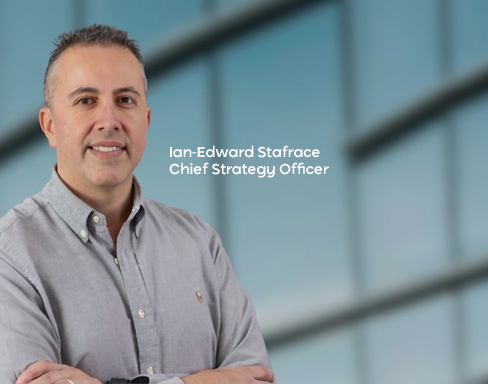
Ian-Edward Stafrace, chief strategy officer at Atlas Insurance PCC, explains how EU and UK protected cells can work alongside existing US and offshore captives, providing the admitted insurance capability needed to write group and customer risks in Europe, reducing dependency on fronting carriers, and giving groups greater control over product design, distribution and customer value.
The European access gap
Many US and offshore captives already perform exactly as intended, helping international groups retain risk, access reinsurance markets, and bring greater discipline to their insurance programmes and risk financing.
Challenges often emerge when those same groups need to insure risks or customers in Europe, where often covers need to be written on an admitted basis by an authorised insurer.
This can create a practical gap between where the captive sits and where the policy needs to be issued. The captive may remain the right risk-retention vehicle for the group, while still needing an admitted insurer to issue policies to European subsidiaries, customers or distribution partners.
Similar considerations arise for businesses that are not traditional captive users. Companies that have successfully sold protection products, service contracts, warranties, cancellation benefits or other value-added services outside Europe may find that, in many European markets, these products fall within the regulatory definition of insurance.
Entering Europe can therefore require an admitted insurance solution that allows the group to retain control over product design, distribution relationships, data, intellectual property and customer experience.
An EU protected cell, especially in a PCC with a UK branch for UK risks, can complement an existing US or offshore captive. The cell can act as the admitted European insurance front-end, writing risks or customer policies directly where permitted, while reinsuring the appropriate share of risk back to the group’s existing captive or reinsurance structure.
When fronting becomes dependency
Fronting carriers remain important, providing admitted paper, local regulatory knowledge, claims infrastructure and coordination across territories. However, they are not always available on terms that fit the captive owner’s objectives.
Fronting fees, minimum premiums, collateral requirements, and changing risk appetite can affect feasibility, particularly when European premium volumes are below carrier thresholds or when the group needs to move quickly on a new product, distribution partner, or market opportunity.
The commercial issue is wider than cost. A group may have reinsurance capacity lined up, or may be comfortable retaining the risk in its existing captive, while still depending on a third-party carrier to issue policies. That dependency can affect timing, cover design, data access, claims philosophy and continuity at renewal.
For customer-facing insurance, reliance on a third-party carrier can also affect direct relationships with distribution partners and customers, as well as the intellectual property behind pricing, technology, product design or the customer journey.
A complementary European front-end
Protected cells are often discussed as alternatives to standalone captives or insurance companies. They can also be used alongside existing captive structures, particularly where the missing element is admitted access to European risks or customers.
The existing US or offshore captive can continue to retain risk and use its existing reinsurance programme.
The European cell provides the admitted insurance capability needed in the EU and, where the PCC has a UK branch, in the UK. It can issue policies to European subsidiaries, customers, or distribution partners, reinsuring, in turn, with the existing captive or reinsurance vehicle.
The cell benefits from the PCC’s established licence, governance framework, key functions, reporting infrastructure and regulatory relationship. Its assets and liabilities remain legally segregated from those of other cells and the non-cellular core.
The group can also start with a defined scope, such as a particular class of business, territory, subsidiary group or customer product, and evolve the cell as experience, data and distribution develop.
Group risks and customer risks
The structure can be used for a group’s own European risks, particularly where admitted local policies are required, and the existing captive remains the preferred risk-retention vehicle.
These may include selected property, financial lines, employee benefits or other covers where the risk profile and local requirements fit the cell structure.
The same model can also be relevant where the insured is not the parent group but the group’s customers. This is becoming increasingly important as more businesses build protection products around their core services. Examples include extended warranties, cancellation covers, device protection, service plans, travel-related benefits, mobility products and other embedded or affinity insurance propositions.
We have seen this with companies expanding into Europe after successfully operating protection products elsewhere. A South American business, for example, had sold its protection product for years as a non-insurance service.
In many EU countries, the product needed to be structured as insurance. The company did not wish to place the business through a global carrier, as it wanted to maintain direct relationships with its distribution partners and protect the intellectual property it had developed around the product. It therefore established an insurance cell to write the risk.
We have also seen large InsurTechs with offshore reinsurance captives establish protected cells with Atlas to provide admitted EU and UK insurance. This allowed them to move more rapidly with distribution partners and reduce dependency on third-party carriers.
Where timing is tight, a PCC with an active non-cellular core may also provide an interim route, subject to appetite, existing permissions and the nature of the risk.
The core can write the business initially and reinsure the appropriate share back to the existing captive while a dedicated cell is assessed or progressed.
Customer value
When going beyond group risks to include customer-facing insurance, conduct expectations come into scope, including product oversight, fair value, distribution controls, claims handling, complaints management and clear customer communications.
Customer-facing insurance also changes the economics of the relationship. Many groups currently earn commissions or other distribution income when placing protection products with third-party insurers.
Regulators in the EU and UK are increasingly scrutinising whether the amount paid by the customer is fairly reflected in the cover and service received, particularly where a significant proportion of the premium is absorbed by distribution remuneration or fees rather than claims, risk transfer and customer benefit.
A cell can help realign these interests. Instead of relying primarily on commission income from a third-party carrier, the group can participate more directly in the product’s underwriting performance. This can reduce pressure on distribution margins, improve transparency around product value and create a stronger link between pricing, risk, claims experience and customer outcomes.
Why Malta
Malta’s relevance comes from its combination of EU membership and protected cell legislation. As the only EU member state with insurance protected cell legislation, it enables cells within a licensed PCC to write insurance directly across the EEA, subject to the relevant permissions.
Atlas adds a further dimension by having an authorised UK branch. This enables cells hosted by Atlas to consider both EEA and UK risks within one broader structure.
Atlas’s position is also strengthened by its own operating substance. Atlas has been part of the Maltese insurance market for over 100 years and was the first traditional insurance company in the world to convert into a Protected Cell Company over 20 years ago.
It continues to write local non-life insurance through its active non-cellular core, covering over 20% of Malta’s non-life insurance market. This active domestic presence helps address substance and arbitrage concerns that can arise when an insurance vehicle only writes risks outside its domicile.
Atlas also has experience with different types of cell business, including traditional captive risk-financing structures, third-party customer insurance, embedded and affinity insurance, InsurTech models and reinsurance arrangements with existing captives.
As an independent PCC host, Atlas can also work with the cell owner’s preferred advisers, brokers, captive managers, insurance managers and service providers, while retaining the oversight expected of the authorised insurer.
Many US and offshore captives are already well-established and integrated into their owners’ risk, finance, and reinsurance arrangements. Where European admitted access, customer insurance or carrier dependency create constraints, a complementary protected cell can strengthen the overall structure. It can make European access more controlled, more strategic and better aligned with the captive structure already in place.
-

How MGAs can control and build ownership of their insurance…
This article originally appeared on 'The Voice' June 2026 Atlas has just celebrated its first anniversary as an MGAA member. Our application for membership followed hot on the heels of …

Atlas contributed to Captive Insurance Times’ June 2026…
Atlas Insurance PCC has been featured in the June 2026 edition of Captive Insurance Times as part of its Malta Domicile Profile. In the publication, Ian-Edward Starfrace, Chief Strategy Officer …

Captives Move to Centre Stage
This article originally appeared on the Captive Insurance Times: December 2025 issue Captives Move to Centre Stage The captive insurance market in 2025 saw an evolution that significantly outpaced initial …