Atlas Insurance, 419 Ta' Xbiex Seafront, Ta' Xbiex.

Captives Move to Centre Stage
This article originally appeared on the Captive Insurance Times: December 2025 issue
Captives Move to Centre Stage
The captive insurance market in 2025 saw an evolution that significantly outpaced initial industry projections, moving captives from niche instruments to strategic enablers of corporate and regional resilience. Experts agree that the year was defined by structural realignment rather than incremental growth, with captives proving remarkably sticky even as commercial rates eased.
Daniel Towle, president of Captive Insurance Companies Association (CICA), identified the United Kingdom’s recent approval to become a captive insurance domicile as one of the most impactful developments of the year. This structural momentum was accelerated by new French regulation, inspiring other European countries to revisit their frameworks. Marine Charbonnier, head of Captives and Facultatives Underwriting, APAC & Europe, AXA XL, concluded that captives had moved from the margin to the centre of corporate resilience in Europe, with companies now seeing captives as strategic enablers of long-term transformation.
Initial projections for 2025 were often conservative, largely viewing sustained growth as primarily a hard-market phenomenon that would slow as the commercial market softened. What transpired was fundamentally different. Ian-Edward Stafrace, chief strategy officer at Atlas Insurance PCC Limited, noted that once boards experienced the transparency and control a captive offers, they did not dismantle these structures simply because pricing improved, consolidating the captive’s role as a permanent risk-management tool.
This consolidation was supported by the democratisation of risk financing, largely driven by the mainstreaming of cellbased structures. Lori Gorman, deputy commissioner, and Joe Rosenberger, chief captive analyst, at N.C. Department of Insurance, confirmed that the flexibility of protected cell captive structures, allowing for lower initial costs and speed to market, continued to be a clear trend throughout the year. This shift to broader accessibility enabled new client types, notably the gradual adoption of captives by family offices, as observed by Henry Brandts-Giesen, partner and global co-chair, Family Office and High Net Worth at Dentons, to cover esoteric assets that are difficult and expensive to insure in conventional markets, such as air and marine craft, and art and antiquities.
The structural changes enabled captives to embrace new risk frontiers, particularly in the health and wellbeing space. The use of captives to finance employee benefits became a strategic priority, with Daniela Masters, global EB analytics and marketing director at Generali Employee Benefits Network, reporting that adoption accelerated beyond expectations, driven by rising global healthcare premiums and the need for global harmonisation. Masters noted that over 40 per cent of employers now use or consider captives for benefits financing.
New lines such as cyber and medical stop-loss saw sustained growth in established domiciles like Tennessee, according to Carter Lawrence, commissioner of the Tennessee Department of Commerce and Insurance, who also noted increased interest from the municipal sector with government-owned captives being formed.
Furthermore, Dean Spense, CEO and director of Vanuatu Captive Insurance Services, noted an accelerating shift towards captives as central resilience vehicles and even sovereign risk-financing instruments to address Nat Cat exposure in the Pacific. Beyond these contributor focus areas, the year was marked by increased corporate engagement with non-traditional risks like artificial intelligence liability and pervasive geopolitical instability.
This focus on global harmonisation was also evident, as Mattieu Rouot, CEO of MAXIS GBN, highlighted that multinationals are increasingly leveraging their captives to implement a global minimum standard of benefits. This was coupled with the industry’s heightened focus on developing advanced regulatory frameworks to empower captives to manage complex issues such as ESG and data privacy.
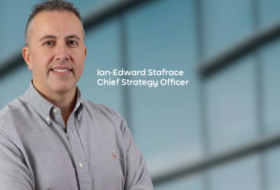
Ian-Edward Stafrace, Chief Strategy Officer at Atlas Insurance PCC: The dynamic that most commanded my attention in 2025 was how cell-based structures moved from a niche alternative to a well-understood, respected way for organisations to finance risk and, increasingly, to support customer-facing propositions.
Stakeholders intensified pressure to bring captives onshore and to convert non-admitted covers and unregulated protection products into fully regulated insurance. At the same time, more countries sought to facilitate onshoring of captives, which raised awareness and confidence in captive solutions generally and widened the lens through which organisations considered European domiciles and cell platforms as strategic options.
At the start of 2025, the general view on captive growth was still quite conservative. Many expected the growth story to be primarily a hard-market phenomenon, projecting that as the commercial market softened, new formations would slow and premiums would flow back to traditional carriers. Domicile reform was also framed as a slow burn, with incremental tweaks in Europe but offshore centres expected to remain clearly dominant.
What actually happened was more structural than that. Even as rates eased in many lines, captive utilisation proved remarkably sticky. Global data showed premiums in captives continuing to grow, with captives now accounting for close to a quarter of global commercial insurance premiums according to AM Best.
Once boards experienced the transparency, control and reinsurance access that a captive offers, they did not dismantle those structures simply because pricing improved.
Growing familiarity with cell structures then reinforced this trend by providing a more efficient route to captive and capacity ownership, mitigating barriers to entry. Worldwide, risk-bearing entities, including cells, now number in the tens of thousands, and analysts highlight cells as a key mechanism for democratising access for mid-sized companies while also delivering efficiencies for larger organisations.
In Europe, Malta’s PCC framework stands out where cell numbers have overtaken insurers and captives combined. Reforms now allow cells to transfer between PCCs or be converted into standalone insurers creating real options for prospective cell owners. In practice, that means risk managers can ‘rent’ licence, substance and governance to test strategies and gain experience, rather than having to build an insurer from scratch.
At the same time, the profile of who uses these structures shifted. Cells are increasingly used by insurtechs, MGAs, retailers and platforms wanting to become carriers, retain underwriting profit and own the customer experience. That is particularly visible in embedded and affinity insurance. Instead of simply earning commission on someone else’s policy, more sophisticated groups are using captives or cells to underwrite covers such as extended warranties, device protection or travel insurance under their own brand, effectively shifting from pure cost-reduction to profit centres that are better positioned to evidence Consumer Duty and EIOPA fair-value expectations.
Overlaying all this is a decisive move towards onshore substance and governance. Stakeholders are now actively pushing for robust, well-regulated domiciles, which has made well-substanced onshore PCC platforms with cross-border access more attractive as shared infrastructure.
Compared with initial projections, the reality in 2025 was that captives did not retreat with the softening market but consolidated their role as a permanent, strategic riskmanagement tool. Cells moved from an ‘interesting niche’ to mainstream enablers, particularly for mid-market and non-traditional owners, and onshore, substance-rich domiciles gained ground faster than expected.
Taken together, democratisation through cells, the rise of affinity and embedded plays, and the onshore substance agenda have fundamentally changed how we talk about captives, which are now seen as platforms for innovation and value creation, sitting at the intersection of risk, strategy and regulation.
-
Solving European Access for US and Offshore Captives
Ian-Edward Stafrace, chief strategy officer at Atlas Insurance PCC, explains how EU and UK protected cells can work alongside existing US and offshore captives, providing the admitted insurance capability needed …

How MGAs can control and build ownership of their insurance…
This article originally appeared on 'The Voice' June 2026 Atlas has just celebrated its first anniversary as an MGAA member. Our application for membership followed hot on the heels of …

Atlas contributed to Captive Insurance Times’ June 2026…
Atlas Insurance PCC has been featured in the June 2026 edition of Captive Insurance Times as part of its Malta Domicile Profile. In the publication, Ian-Edward Starfrace, Chief Strategy Officer …